
Introduction
Wound care may require more than one medical visit. Patients with surgical wounds, pressure injuries, diabetic wounds, or other slow-healing wounds may need recurring appointments for evaluation and treatment.According to MedlinePlus, wound care centers can provide specialized treatment for wounds that have not healed after a significant period. Attending these appointments can be challenging when pain, weakness, or limited mobility makes standard transportation difficult.
Non-emergency medical transportation can help eligible, medically stable patients follow their scheduled wound care plan while traveling with support suited to their mobility needs.
Wound Care Often Requires Continued Monitoring
Healing can change over time, which is why healthcare professionals may schedule follow-up visits to evaluate the wound and adjust care when necessary.Transportation problems can make this schedule difficult to maintain. A patient may be unable to drive, enter a standard vehicle comfortably, or depend on a family member for every appointment.
A reliable transportation plan removes one practical obstacle. It helps patients reach scheduled care without having to arrange a new ride before every visit.
Pain and Mobility Limitations Can Complicate Travel
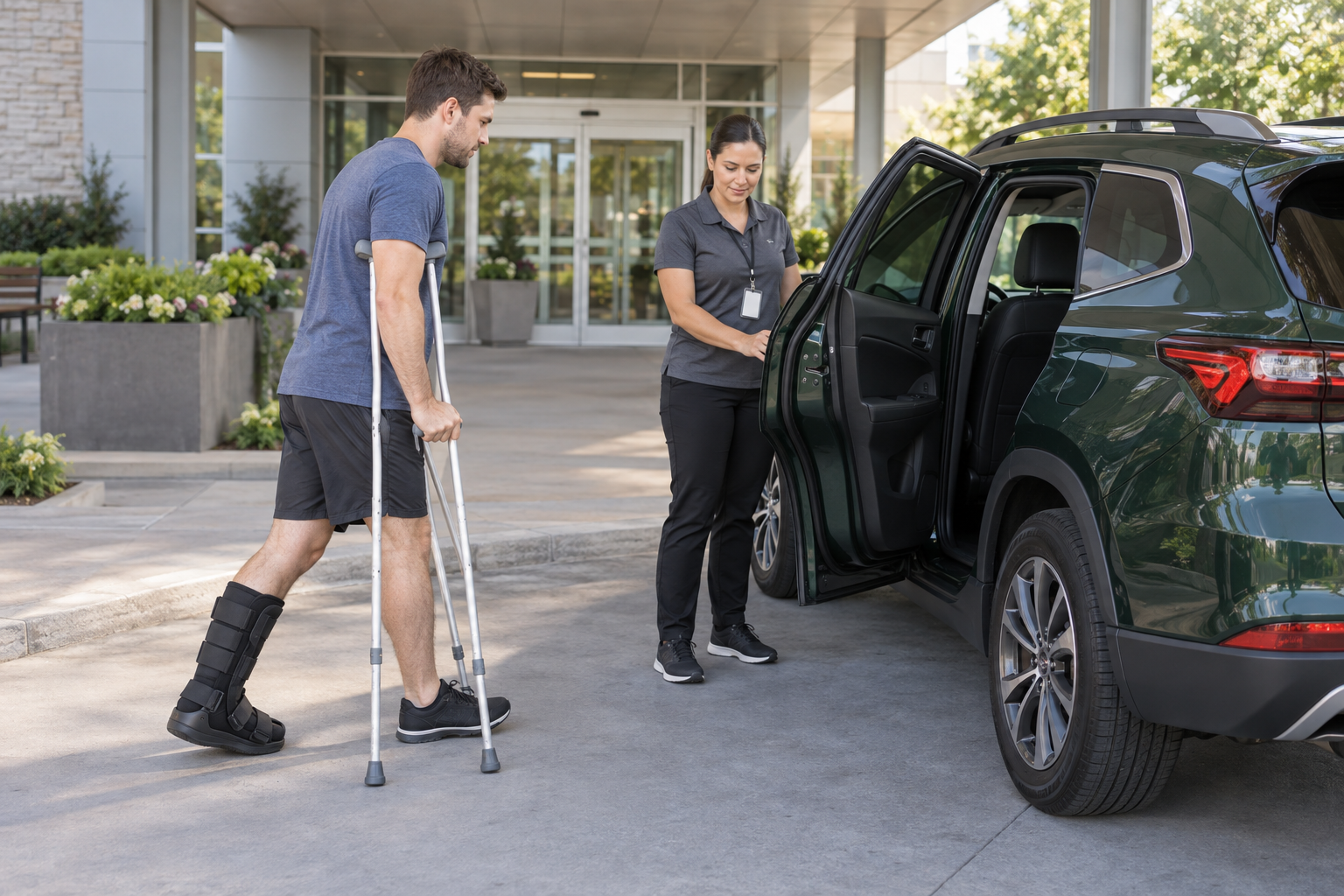
A wound may affect how comfortably a patient can walk, bend, stand, or remain seated. The location of the wound may also make certain vehicle movements or positions uncomfortable. Some patients use a cane, walker, wheelchair, or another mobility device while healing. Others can walk short distances but need additional time and assistance.These needs should be explained when transportation is scheduled. Accurate information helps the provider review whether the vehicle and available accommodations are suitable for the patient.
The Entire Journey Should Be Considered
Transportation planning should include more than the time spent in the vehicle. Patients may need to travel from their home to the pickup area, enter the vehicle, navigate the healthcare facility, and complete the same journey after treatment.Long walking distances and unfamiliar entrances can increase physical strain. Confirming the correct building and closest accessible entrance can make the appointment easier to manage.
The Return Ride May Require Additional Planning
Patients may feel tired or uncomfortable after wound evaluation or treatment. Their dressing, mobility instructions, or ability to remain in one position may also change.Before leaving the facility, patients should follow the instructions provided by their healthcare professionals. If those instructions affect transportation, the provider should be updated before the return trip whenever possible.
The patient or caregiver should also provide a reliable contact number in case the appointment lasts longer than expected or the pickup location changes.
How Caregivers Benefit From Transportation Support
Caregivers often help patients attend wound care appointments, but repeated rides can become difficult to manage alongside work and family responsibilities.They may also be uncomfortable assisting with transfers or helping the patient enter an unsuitable vehicle. Professional transportation can reduce this pressure while allowing caregivers to remain involved in other areas of the patient’s care.
If the patient requires personal assistance or medical supervision, that support must be arranged separately. NEMT does not replace a caregiver, nurse, or emergency medical service.
Scheduling Wound Care Transportation With Halo
Halo Transportation helps eligible, medically stable patients travel to scheduled healthcare appointments, including ongoing wound care visits when appropriate.Patients or caregivers should provide the required arrival time, facility details, expected appointment duration, mobility level, and information about any equipment being used. Changes in the patient’s mobility or transportation needs should be communicated as early as possible. This gives the transportation team an opportunity to review and adjust the ride arrangement according to availability.
Conclusion
Ongoing wound care can require consistent appointments, careful mobility planning, and dependable transportation. Pain or limited movement may make an ordinary ride more difficult than patients and caregivers expect.By scheduling appropriate transportation in advance, patients can reduce the physical and logistical burden of reaching care. A clear travel plan allows them to focus more fully on following the guidance of their healthcare professionals and supporting the healing process.